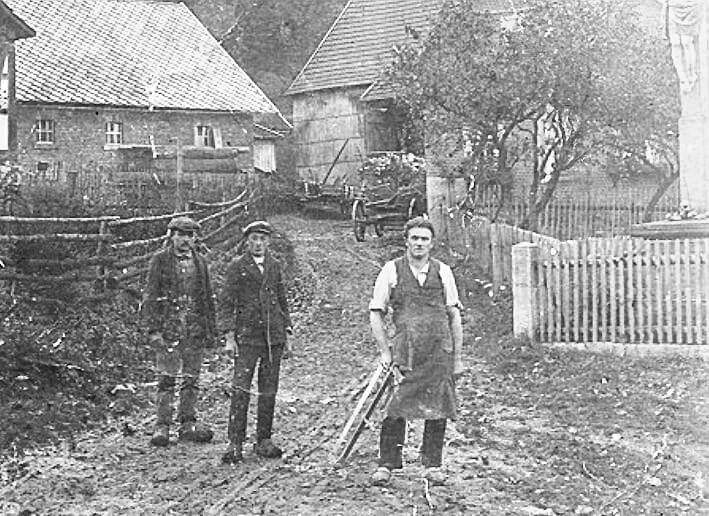
Company founder Ludwig Krenzer with his brothers
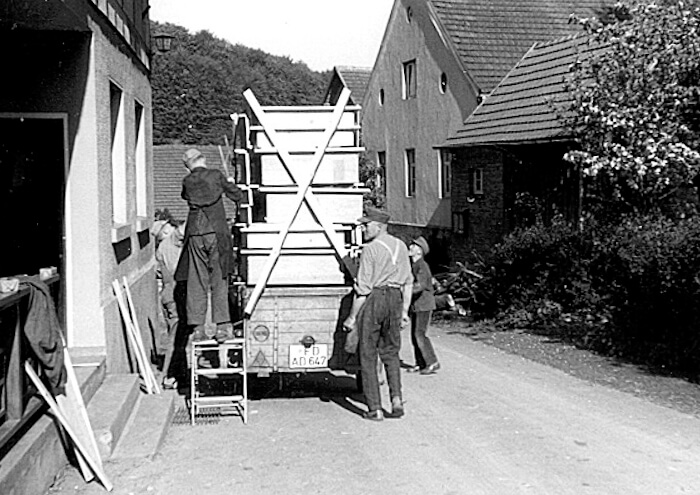
Early deliveries to the construction site
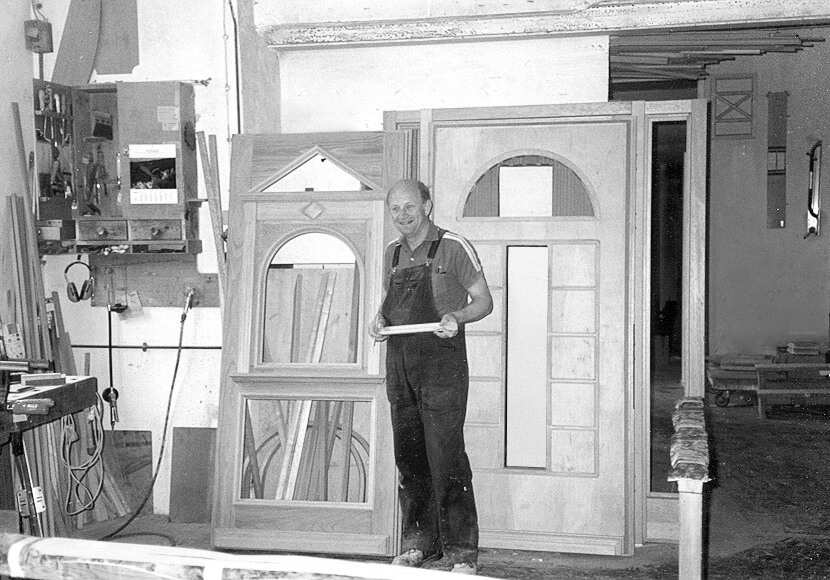
Expert master artisans
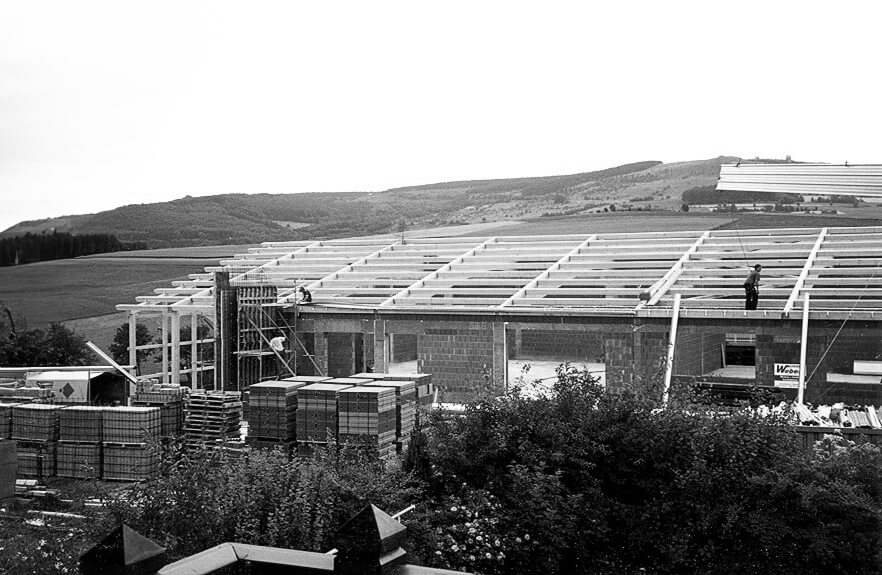
Expansion of production

Completion of the new production hall
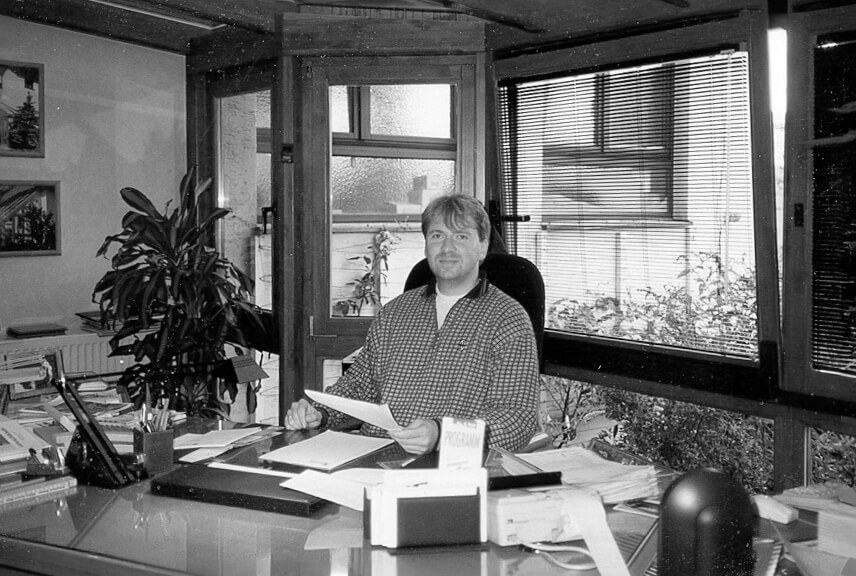
Andreas Krenzer as the third generation
History
The story of Ludwig & Sons is not just that of a craft business that has grown from a small village joinery in 1928 into a globally active company. It is also the story of a family of entrepreneurs who, with passion and innovative strength, have carried on their tradition for generations. By combining proven craftsmanship with a constant spirit of innovation, the company’s history has been successfully continued for over 95 years, despite world wars, economic crises, and pandemics. Whether a private extension or a large-scale project, a Victorian conservatory or a pool house – Ludwig & Sons remains to this day a manufactory for handcrafted, one-of-a-kind pieces that are as individual as their owners. This tradition is also reflected in the brand name, which, in homage to the company founder Ludwig Krenzer, is still “Ludwig & Sons” today.
1920-1923: Ludwig Krenzer’s Joinery Apprenticeship
Ludwig Krenzer was born on 19th February 1904 in Dietges, the second son of a German farming family that had been active in agriculture for over 300 years. As the second-born, he was not the heir to the farm, so unlike his brothers Anton and Edmund, he opted for a joinery apprenticeship. In 1919, when Ludwig was only 15, his father Karl Krenzer died of stomach cancer at the age of just 52. Consequently, Ludwig waited another year to support his single mother on the farm. At the age of 16, he finally began his joinery apprenticeship in the same village, successfully completing it in 1923.
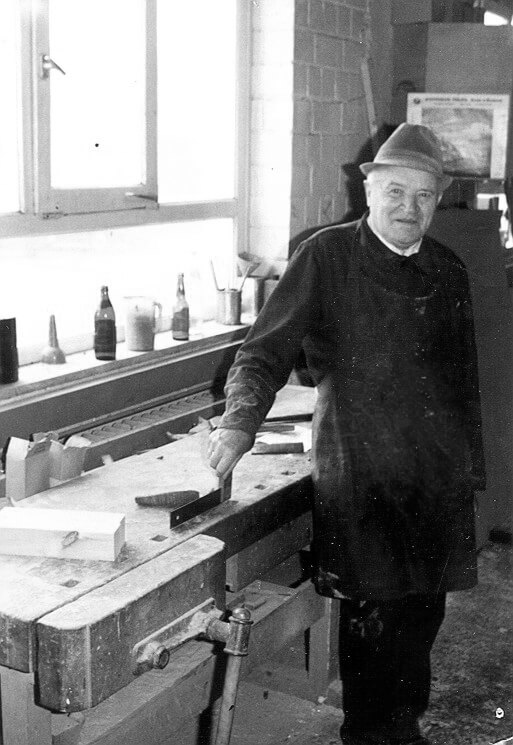
1923-1928: Journeyman Years
After completing his apprenticeship, Ludwig Krenzer, as was customary at the time, embarked on his journeyman years. Journeymen used this phase after their training to learn new working methods and get to know different businesses and places. During this instructive period, Ludwig expanded his existing experience in working with solid wood by learning how to handle veneers and produce high-quality furniture. Besides stops in Fulda and Dortmund, he worked for a longer period in Kelkheim, the “City of Furniture”. This town in the Taunus region, almost equidistant from Frankfurt and Wiesbaden, was renowned at the time for its excellent reputation in furniture craftsmanship and remains so today due to its unbroken tradition in the joinery craft.
1928-1931: Start of Self-Employment
After returning from his journeyman years with a wealth of new experience, Ludwig Krenzer set up his own business on his parents’ farm in Dietges. He established his workshop in two rooms of the annexe, also known as the ‘Auszugshaus’ (a separate house on a farm for retired farmers), while the few machines were housed in the barn. As a village joiner in a small town in the harsh Rhön region, he produced everything the surrounding households needed – from the cradle to the grave. His product portfolio included windows, doors, stairs, as well as furniture for kitchens, bedrooms, and living rooms. Considering the limited means available to him in these humble circumstances and the craftsmanship required for such a wide range of products, his achievement is all the more remarkable. Without this impressive dedication, the company would not exist today.
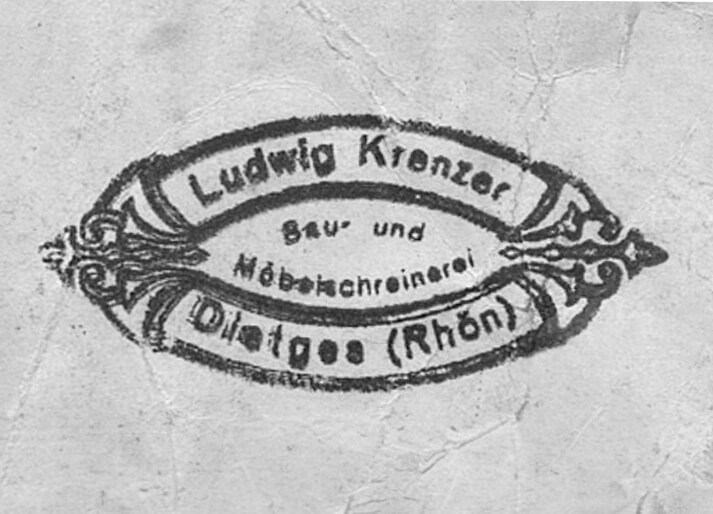
1931-1933: Master Examination and Relocation
On 19th December 1931, Ludwig Krenzer successfully passed his master craftsman examination. He then began preparations for his own joinery workshop: on 19th October 1932, he acquired a plot of land in his birthplace, thus laying the foundation stone for the present-day headquarters of Ludwig & Sons. Between 1932 and 1933, he built a joinery with an adjoining house, of a size that was impressive for the time. Everything was done by hand, from the earthworks to the mixing of concrete and mortar. From 1933 onwards, the entire business moved into the new workshop. A diesel engine powered the machines, and petroleum lamps served as lighting, as Dietges was not connected to the electricity grid until 1938. Production could begin!
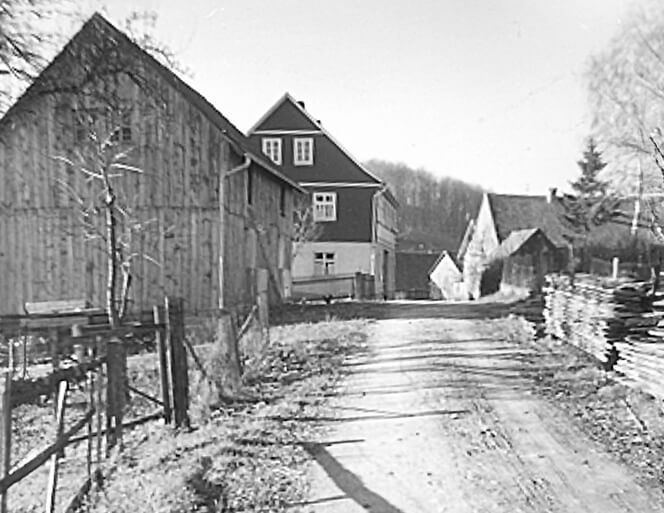
1933-1941: First Employees
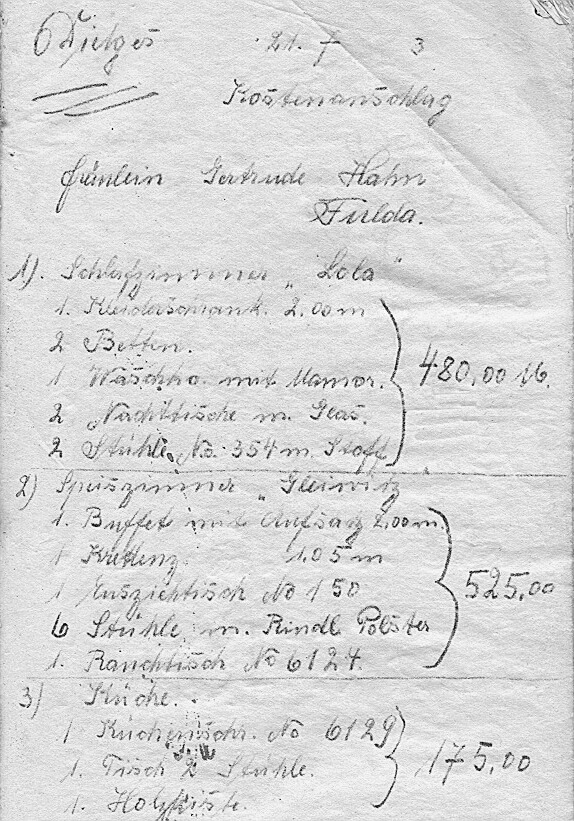
Word of the high quality of the joinery’s work spread quickly, and the business grew steadily. Young families ordered their complete kitchen and bedroom furniture from Ludwig Krenzer, which was custom-made and fully fitted. These pieces of furniture were increasingly delivered beyond the local region, for instance to Bad Orb and its surroundings. To cope with the increasing volume of orders, energetic support was needed. In addition to Emil Schmitt, Anna Krenzer’s brother, and Edmund Krenzer, Ludwig’s brother, the first three apprentices were hired from neighbouring villages.
1945: A New Beginning
The business of Ludwig & Sons was also paralysed by the horrors of the Second World War. Work had to be completely halted for a time, and the continuation of the business was more than doubtful. Fortunately, the joinery was able to resume operations after the end of the Third Reich. However, the new start began again from scratch. The first order, for example, was a two-part cattle shed door with an additional hatch, which was sold in exchange for goods in kind. On 1st December 1945, Arnold Link from Dietges began his joinery apprenticeship with Ludwig Krenzer, significantly strengthening the business. Mr Link remained loyal to Ludwig & Sons for the next 48 years and, together with his colleagues, made a valuable contribution to the successful resumption of the joinery business during that time.
1945-1960: The Economic Miracle
In the following years, production capacity was continuously expanded. Ludwig & Sons also benefited from the German ‘Wirtschaftswunder’ (economic miracle) of the 1950s, with the order situation ranging from “very good to too much”. By this time, Erhard Krenzer, the eldest son of Ludwig and Anna Krenzer, was also working in the company. He had begun his joinery apprenticeship in his parents’ business on 1st October 1949 and successfully completed it with the journeyman’s examination in 1952. In 1958, Werner Zentgraf, a qualified joiner, joined the team and in 2018 celebrated his 60th work anniversary. Even after that, he remained loyal to Ludwig & Sons and is still regarded as one of the most exceptionally talented craftsmen in the company’s history.
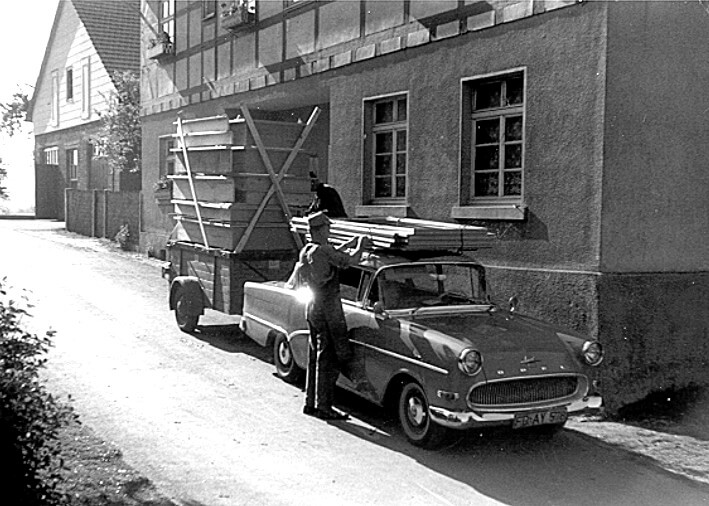
The First Company Cars: From Motorcycle to Transporter
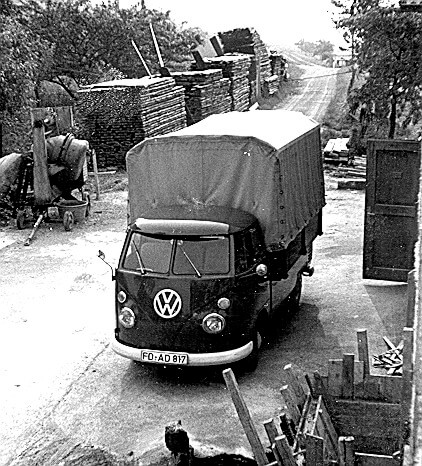
The motorcycle purchased in 1936 was confiscated during the Second World War. Thus, in 1946, the business started again with a men’s bicycle that had been exchanged for a kitchen cabinet. In 1947, a new motorcycle was acquired, this time in exchange for a living room cabinet. Until 1955, off-site installations were carried out using this heavy motorcycle. The required materials were transported to the building site by the milk transporter from the neighbouring village, while the installers followed on the motorcycle with their tools, in all weathers. In the spring of 1955, a VW Beetle with a trailer was finally purchased, allowing the products to be transported to the building site by the company for the first time. This was a great step forward that seems self-evident today. The VW Beetle was later replaced by an Opel as a second company car, which in turn was replaced in the 1960s by a VW Transporter, making assembly with a trailer obsolete.
1960-1994: First Major Projects
In the 1960s, Ludwig & Sons received its first major contracts. To manage the workload, the premises had to be continuously expanded: in 1966 and 1972, two-storey workshop areas were added to the existing buildings, and finally, a larger hall was added in 1983. The first forklift was purchased, and the number of employees temporarily rose to between 20 and 22. From 1986, Andreas Krenzer, the second eldest son of Erhard and Ursula Krenzer, joined the company management. During this period, the specialisation in bespoke glazing projects such as Victorian conservatories and orangeries began.
1994-2000: Expansion of the Company Building
On 1st January 1994, Andreas Krenzer took over the management of the Krenzer company and founded a GmbH (a limited liability company). He had previously attended the master craftsman’s school in Bad Wildungen, produced his masterpiece, and successfully passed the master craftsman examination on 30th June 1990. As early as 1996, the company buildings were extensively expanded and renovated: the existing hall was enlarged with additional production and storage areas. A large showroom area was also integrated, and the windows, exterior rendering, and outdoor facilities were renewed. The ‘structural patchwork’ of previous years was given a unified design, and the company building of Krenzer GmbH, to which the Ludwig & Sons brand belongs, shone with new splendour. In parallel, the specialisation in Victorian conservatories and orangeries in the wood-aluminium system continued to advance.

2009: Acquisition of a New CNC Machine
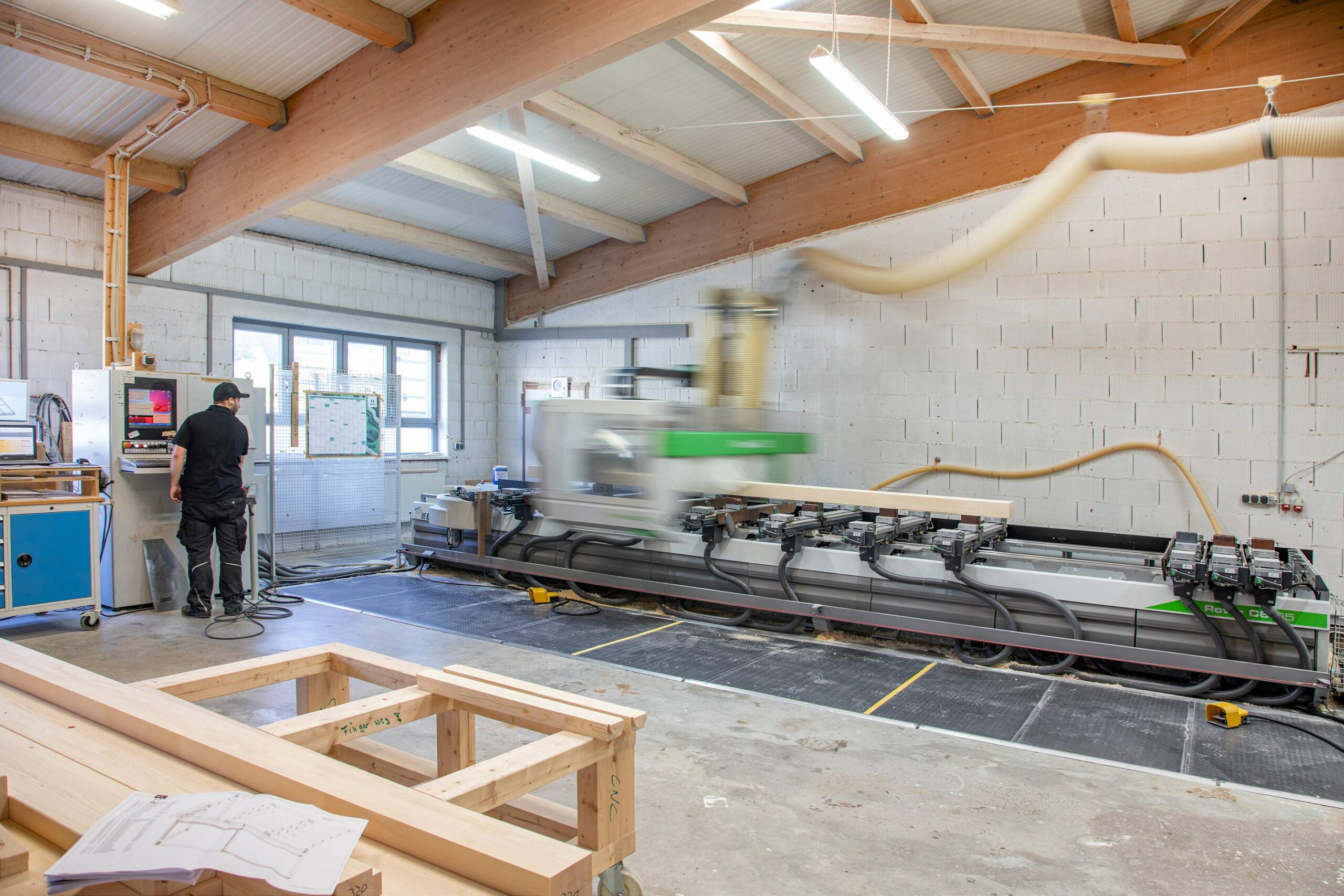
In 2009, a new high-tech CNC machine was delivered and installed, which in the following years became the heart of our semi-automated production. Originally designed for furniture manufacturing, the machining centre was reprogrammed specifically for our needs. This allows us to this day to carry out even complex machining on larger timber parts, as required for Victorian conservatories and orangeries, with high precision. As a result, the components are crafted to furniture quality. Although the entire production process is still heavily characterised by manual work, this acquisition has semi-automated a key production step, thereby significantly increasing efficiency.
2016: Largest Conservatory in Company History
After months of preparation, the installation of our largest conservatory project to date finally took place in 2016. It was a Victorian conservatory erected in the entrance hall of the well-known Iulius Mall in Timisoara, Romania. The complex roof structure and the large spans placed high demands on the entire know-how of our design engineers. A total of 192 roof panes were planned and successfully installed without a single breakage during the assembly. This unique conservatory project attracted national attention and demonstrated our ability to professionally implement large and complex hotel and restaurant projects. The Victorian conservatory became the culinary highlight of the Iulius Mall and welcomes an average of 850 guests daily.

2021: New Showroom Entrance
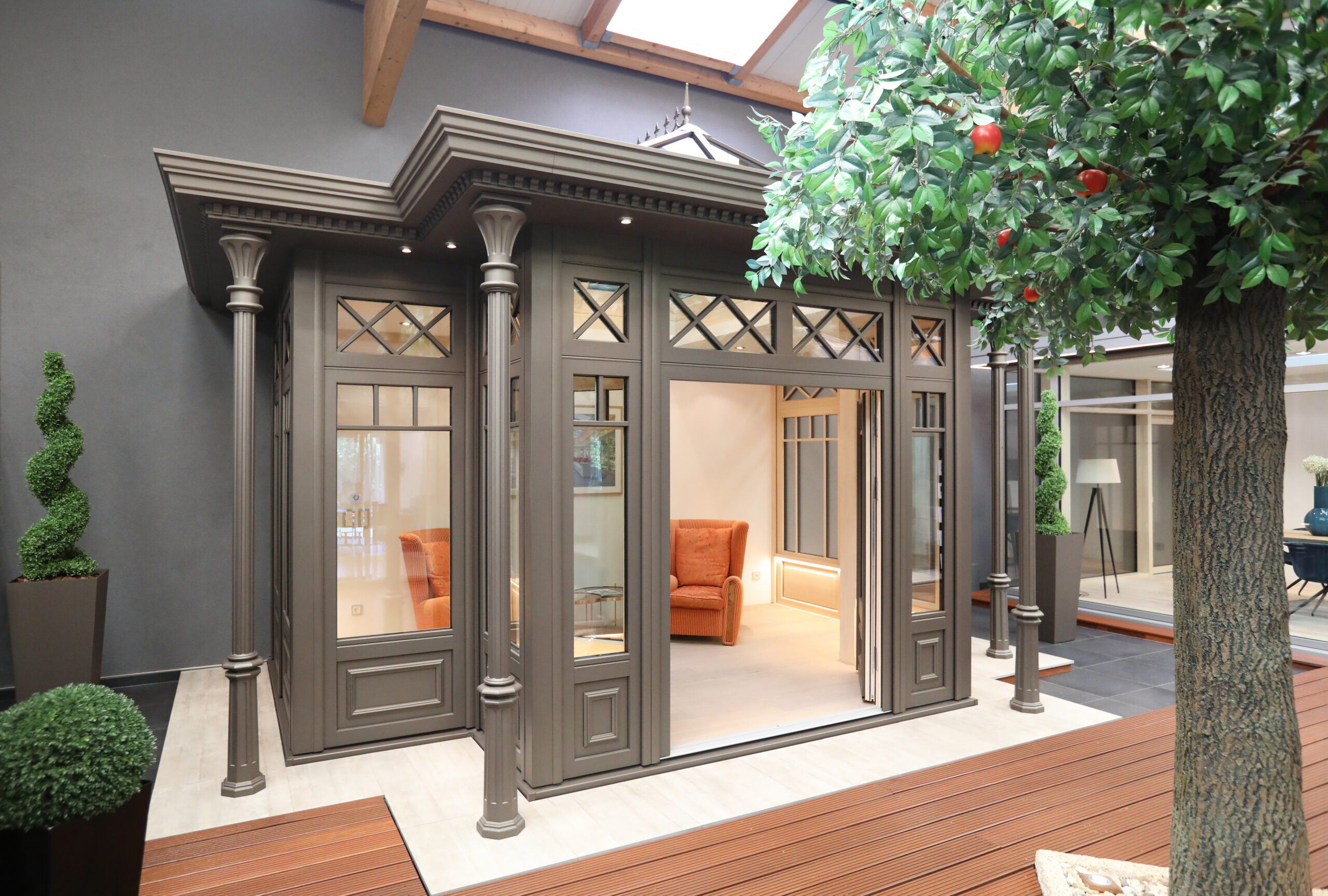
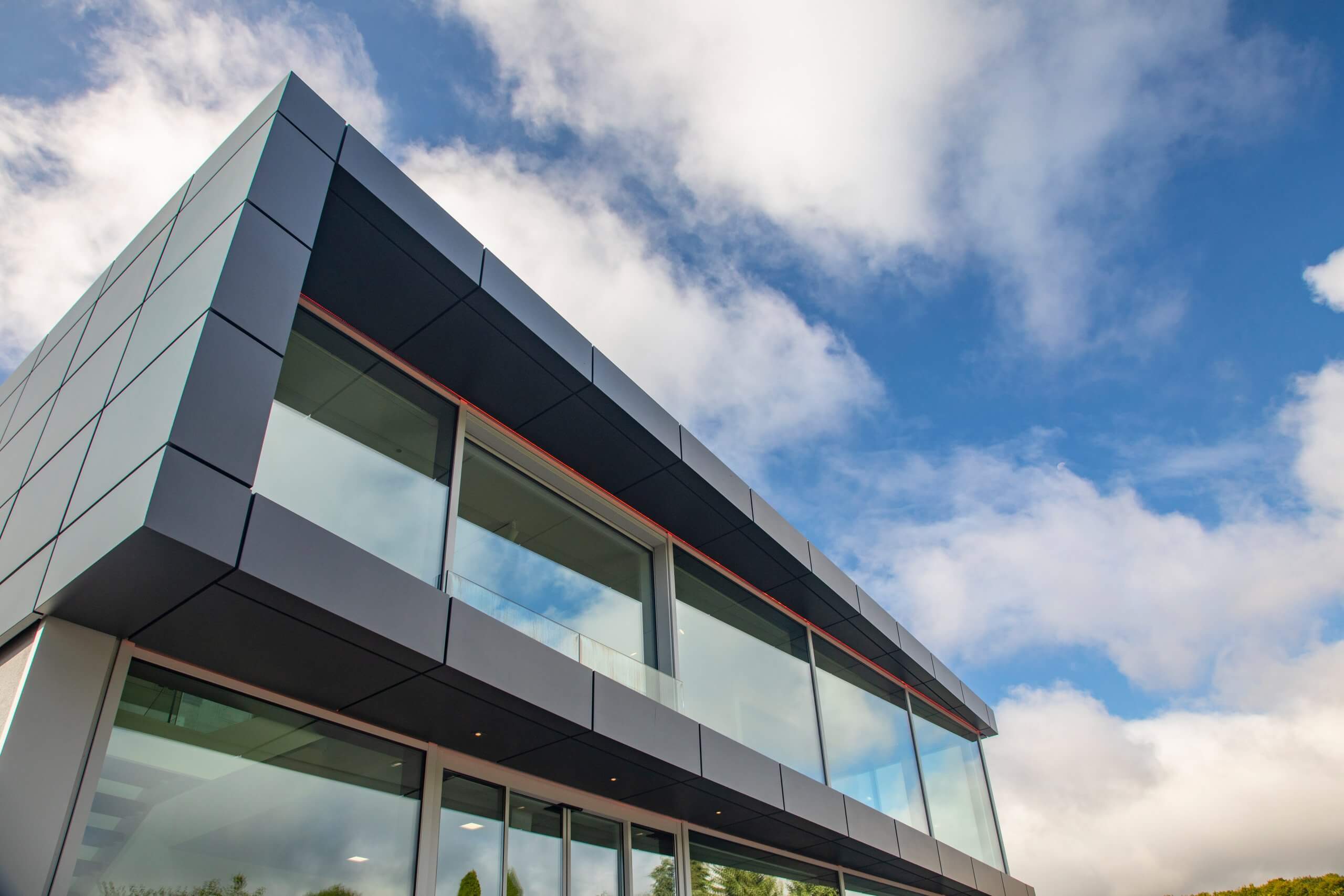
In 2021, our new showroom entrance was completed. The cubic extension was built using ecological timber construction and is distinguished by its large glass facades in an elegant post-and-beam structure. The contrast between the modern extension and our historicist and classic-elegant conservatories and orangeries in the interior was deliberately chosen. As a result, our customers are always amazed when they first experience the modern entrance outside and then see the ornate Victorian-style conservatories and orangeries inside. This fosters a greater appreciation for the necessary craftsmanship required to manufacture our products, which is also reflected in the richness of detail in the construction. We have maintained this artisanal skill to this day and proudly display it in our indoor showroom. Experience it for yourself and simply book an appointment online!
2022: Commissioning of a New PV System
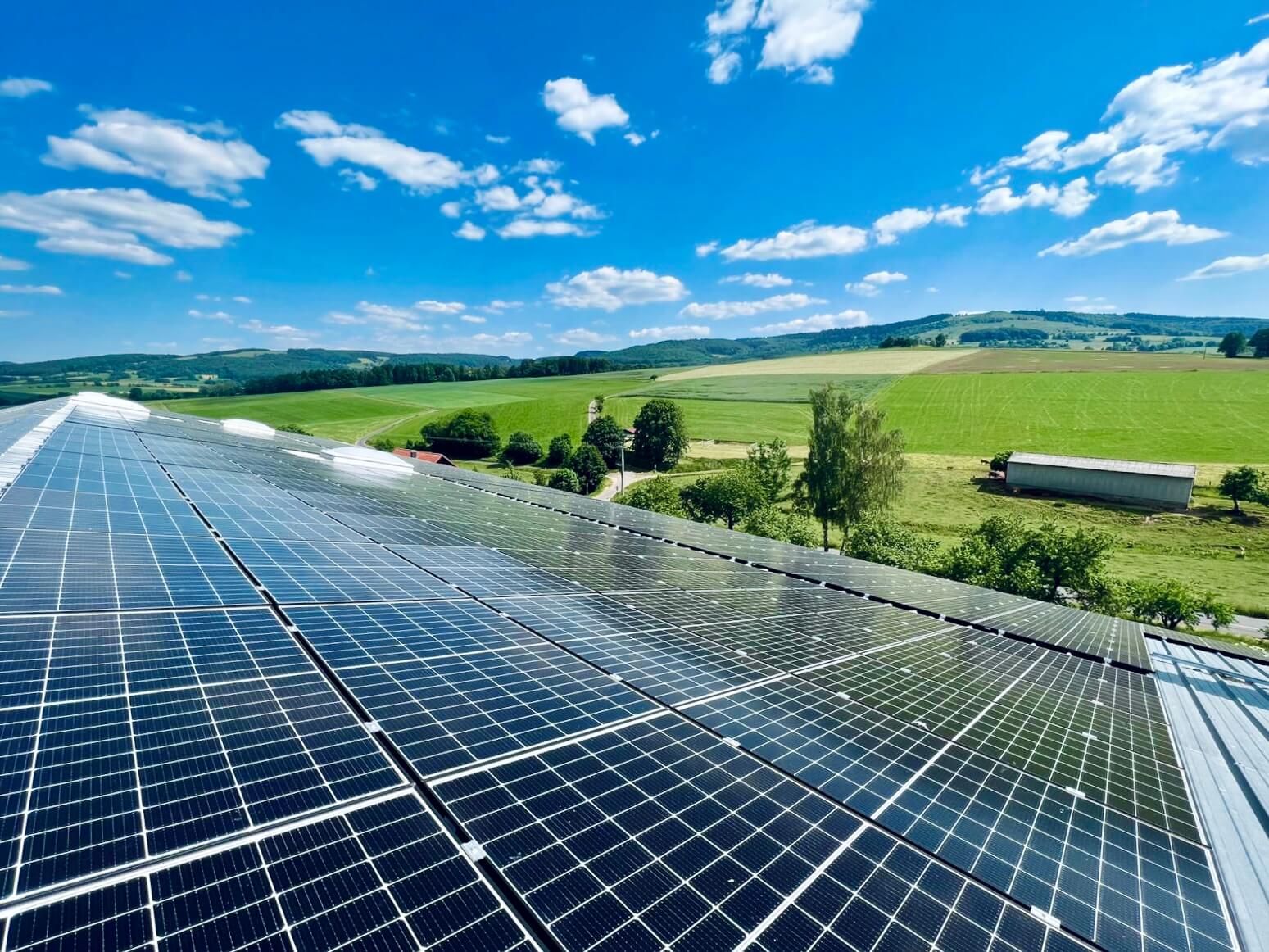
As the owning family of Ludwig & Sons, we place great value on sustainable management and wish to make our contribution to climate protection. Therefore, in September 2022, we equipped almost the entire south-facing side of our hall roof with a 151.7 kWp photovoltaic system. We use the solar energy generated to operate the newly installed heat pumps and the growing fleet of electric company cars. On sunny days, the 370 solar modules allow us to achieve a temporarily completely self-sufficient energy supply, so that the entire electricity demand of the company building is met by self-generated renewable energy. Furthermore, customers and employees can ‘fill up on sunshine’ free of charge at our electric charging stations and wall boxes. In this way, as a medium-sized joinery firm, we are actively contributing to the fight against global warming
From Tradition to the Future
Our story begins in 1928 with Ludwig Krenzer – and it continues to live on in our modern workshop every single day. What started as a small joinery in the Rhön region has grown into a specialised, fourth-generation family business, creating Victorian-style conservatories, orangeries and pool houses to the highest standards of craftsmanship.
If you would like to discover how this tradition becomes contemporary one-of-a-kind creations, we invite you to explore our world: in our workshop, you can see how skilled craftsmanship and CNC technology work hand in hand; in our showroom, you can experience materials, forms and details in person; and throughout our structured project process – from the initial video consultation through to final installation – you will sense how much experience and care goes into every single step.